The Invisible Art: Why We Still Saddle Stitch by Hand
Feb 28, 2025
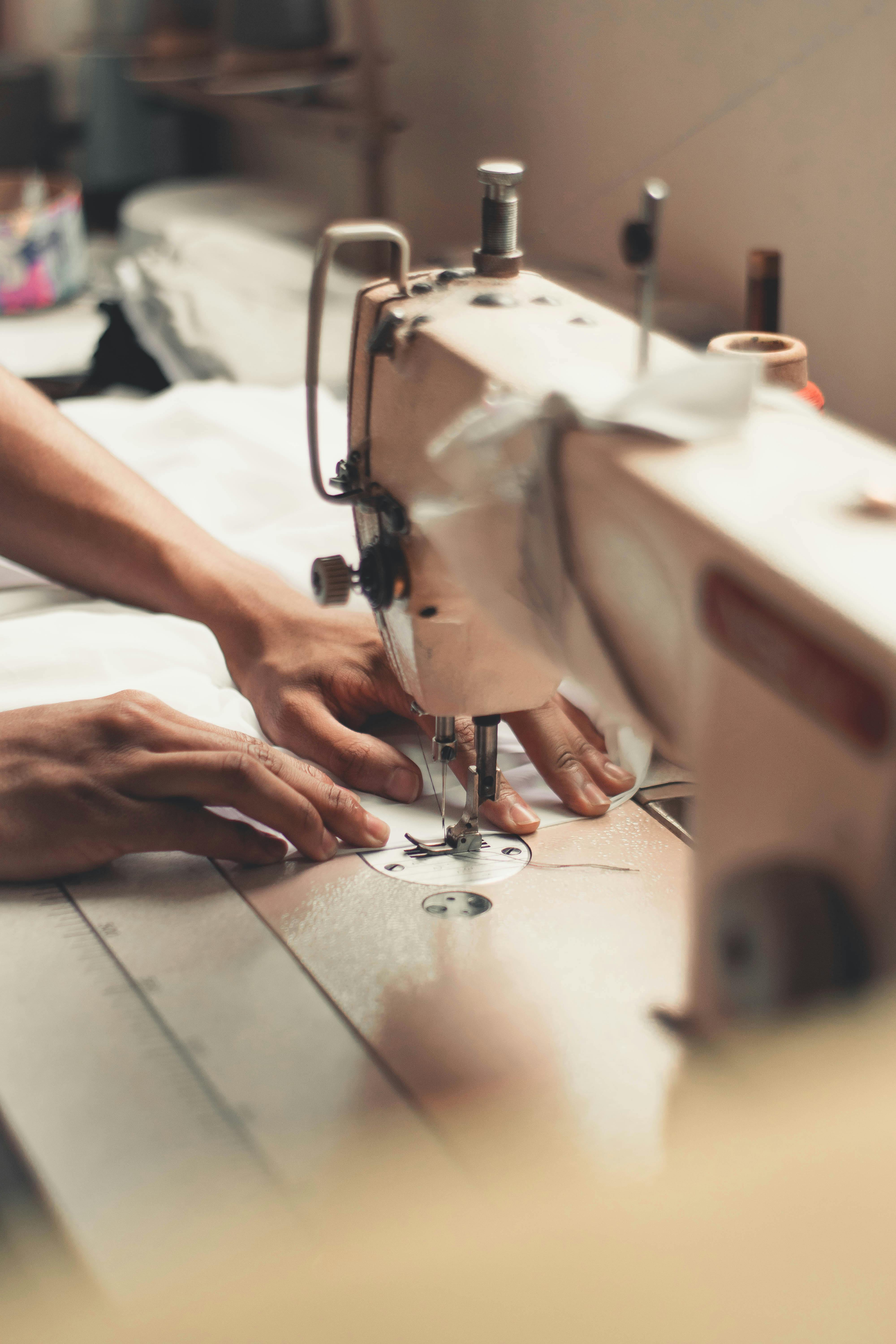
In a world obsessed with speed, there is a quiet rebellion in taking one’s time. At Paulina, we frequently receive the question: "Why does it take twelve weeks to commission a bag?" The answer lies in a single, continuous thread and a technique known as the Saddle Stitch.
For the uninitiated, the difference between a machine stitch and a saddle stitch may seem negligible to the naked eye. Both hold two pieces of leather together. Both create a seam. But mechanically, they are worlds apart.
A sewing machine uses a "lockstitch." It pushes a top thread through the leather, loops it around a bottom bobbin thread, and pulls it back up. It is fast, efficient, and the industry standard for 99% of luxury brands. However, it has a fatal flaw: if one loop breaks, the entire line of stitching can unravel. The structure is compromised.
The Saddle Stitch, by contrast, cannot be replicated by a machine. It requires two needles and a single piece of thread. The artisan passes the needles through the same hole from opposite sides, tying a knot inside the leather with every single stitch. If a thread were to snap after years of use, the rest of the seam remains structurally sound. It is a failsafe mechanism invented centuries ago for horse saddles—equipment where a broken stitch could mean life or death for the rider.
Visually, the saddle stitch offers something a machine cannot: "soul." A machine creates a flat, uniform line. A human hand creates a slight angle to the stitch—a distinct diagonal slant that catches the light. This is not an imperfection; it is the signature of the artisan.
When you carry a Paulina, you are not just carrying a bag. You are carrying hours of silent, focused labor. You are carrying the assurance that your bag was built not just to be sold, but to last.